DevOps consulting: what a good engagement delivers
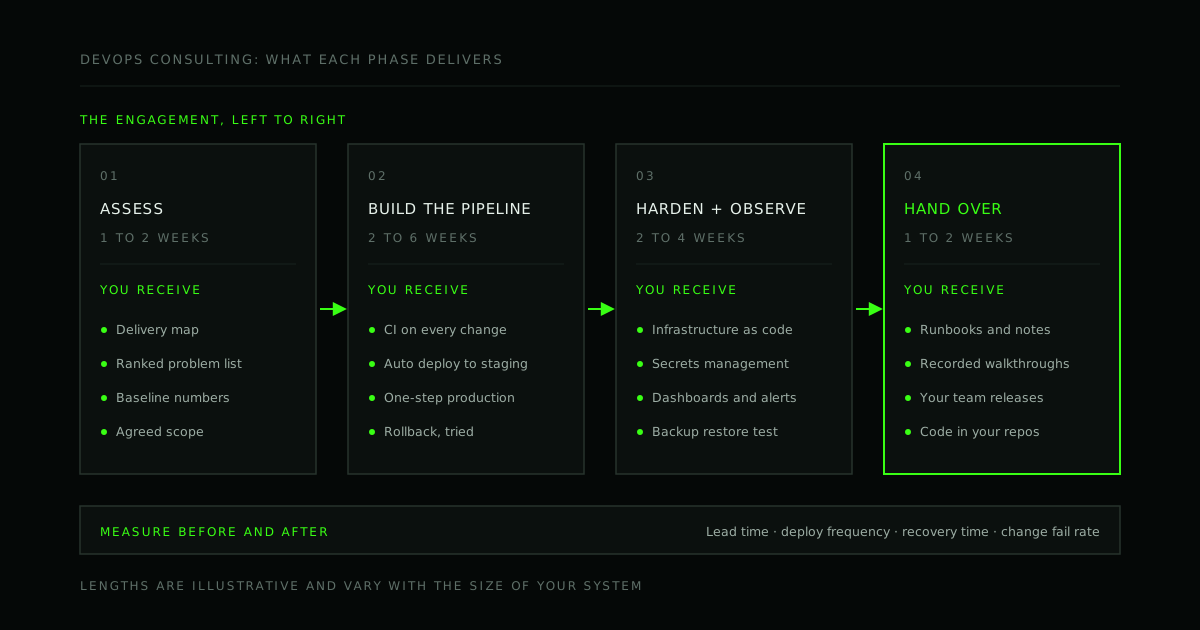
DevOps consulting explained: what a consultant does, the deliverables you should hold at the end, a phase-by-phase plan, costs and the red flags to avoid.
- #DevOps
- #CI/CD
- #Cloud infrastructure
Engineering notes
What we hit building WebRTC systems that have to survive real networks and work for everyone who joins — written up so the next person loses less time to it.
DevOps consulting explained: what a consultant does, the deliverables you should hold at the end, a phase-by-phase plan, costs and the red flags to avoid.
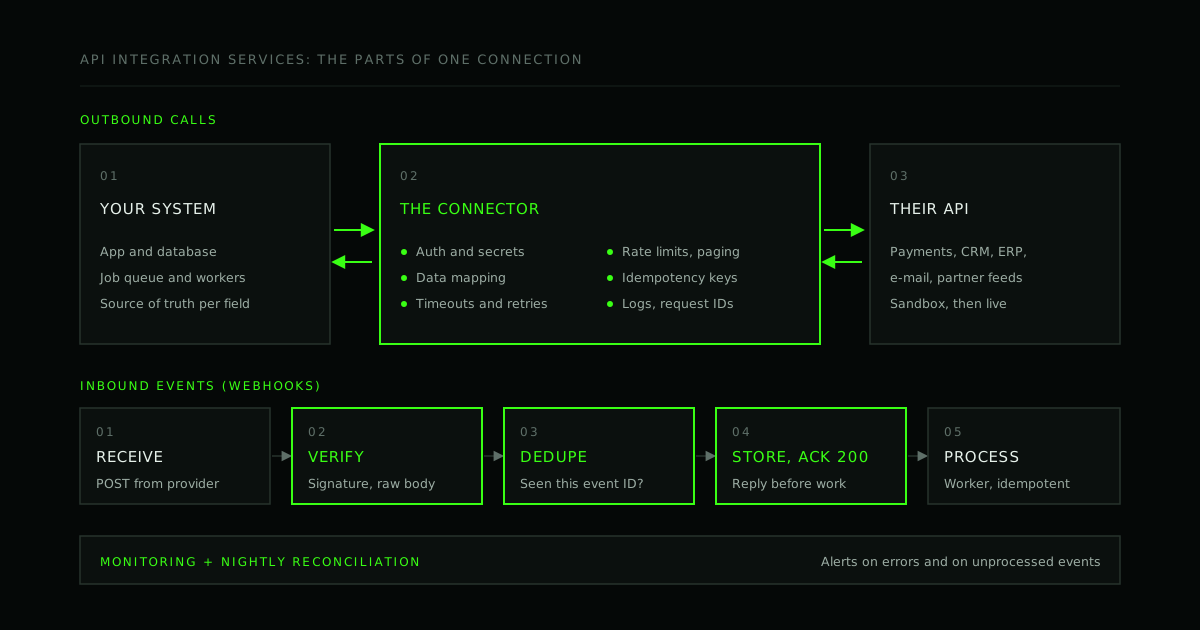
API integration services explained: what the work covers, payment gateway integration, what drives the cost, a worked estimate and what to ask a vendor.
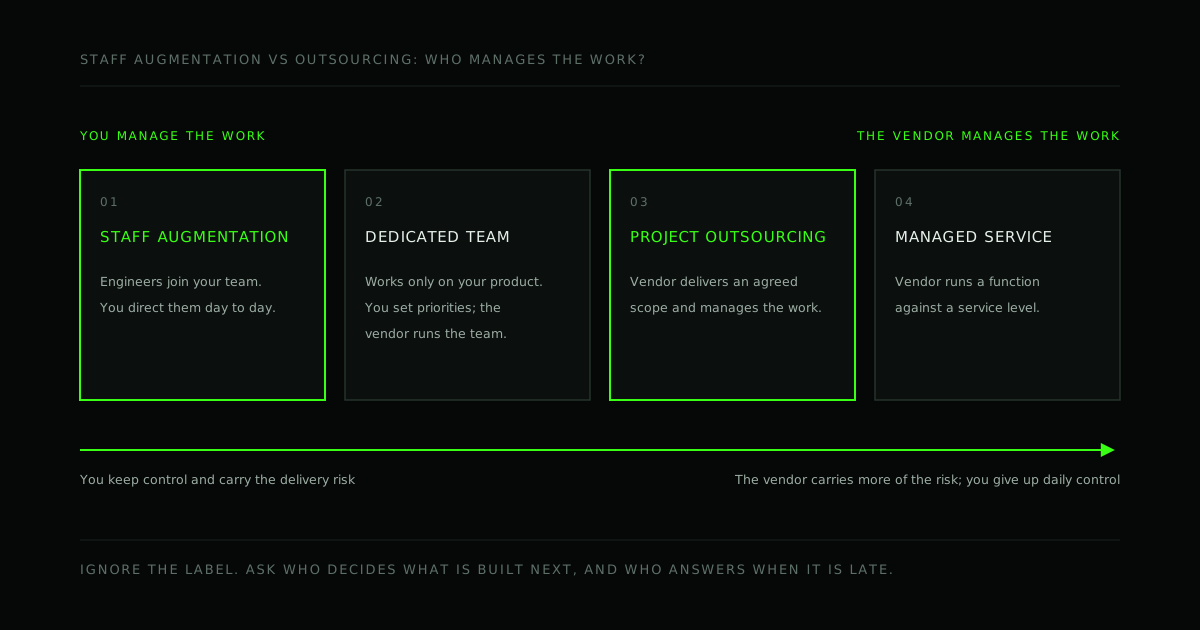
Staff augmentation vs outsourcing: who manages the work, who carries the delivery risk, what each really costs, and a five-question test for choosing.
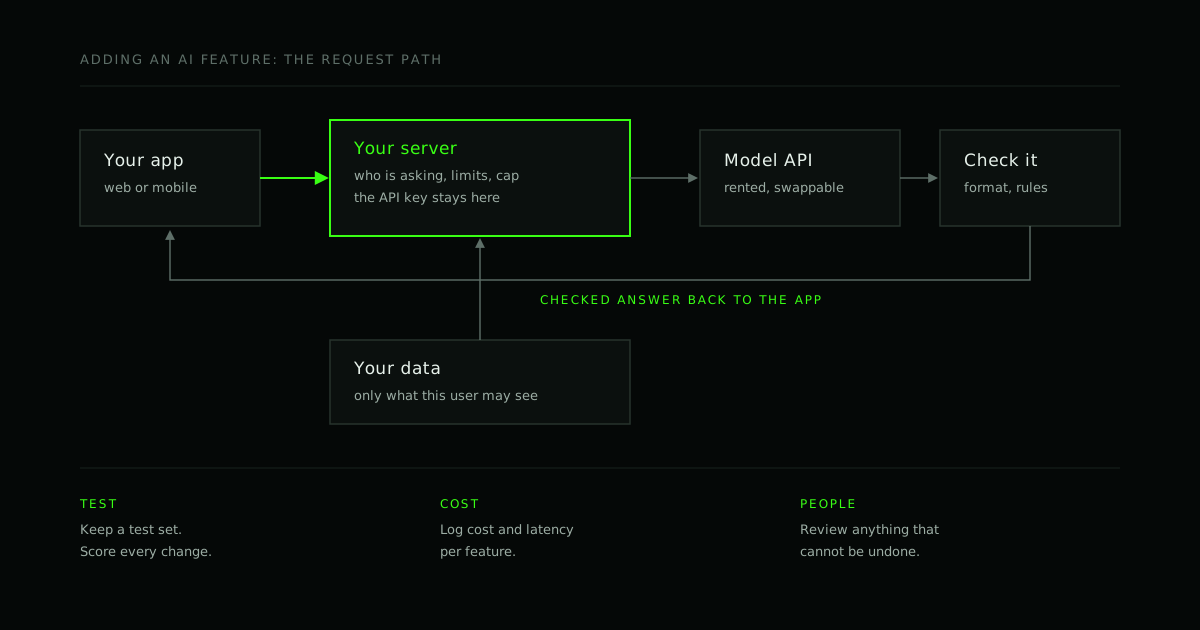
What custom AI development usually means today, which AI features are worth building, how to architect them safely, how to test and cost them, and what to ask an AI development company.
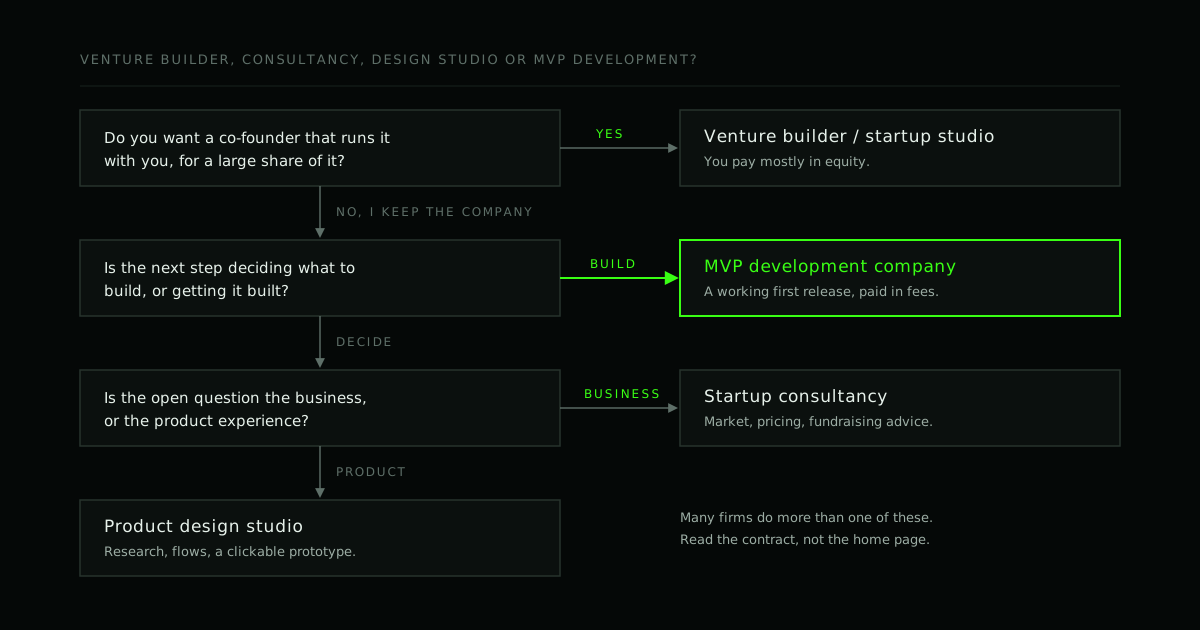
What a venture builder, a startup studio, a startup consultancy, a product design studio and an MVP development company each do, how you pay each one, what you keep, and how to choose.
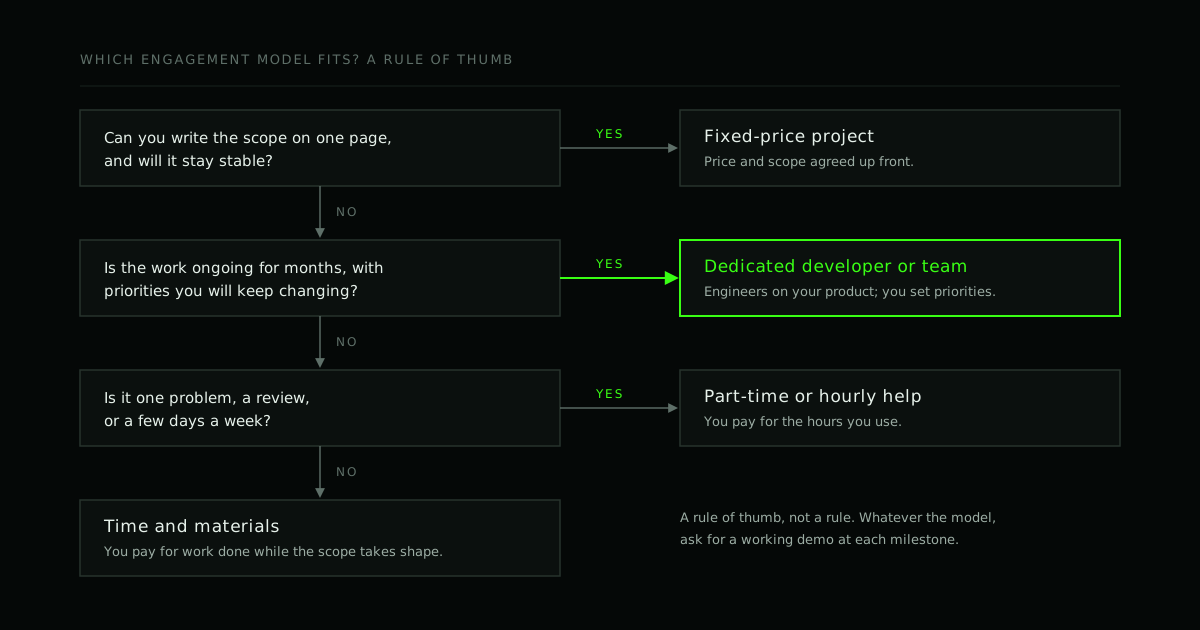
What a dedicated development team is, when it beats a fixed-price project, and what to settle in writing before you hire dedicated developers.
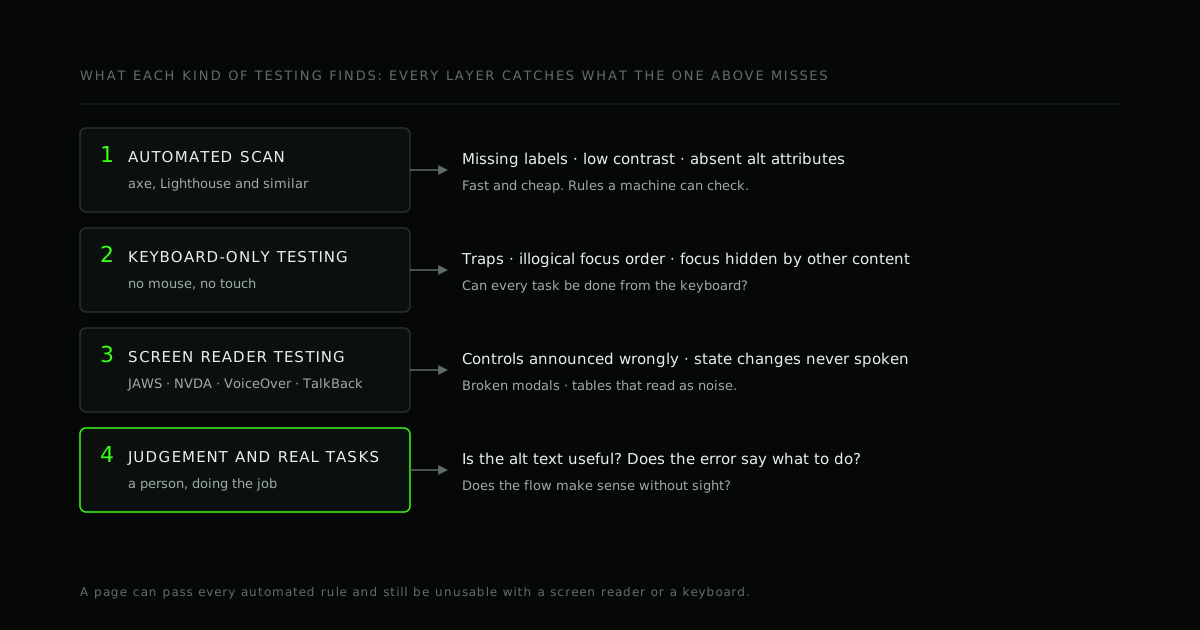
Automated scans find some problems and people find the rest. What a real audit against WCAG 2.2 AA covers, what the report should contain, the questions to ask a provider, and the red flags, including overlay widgets.
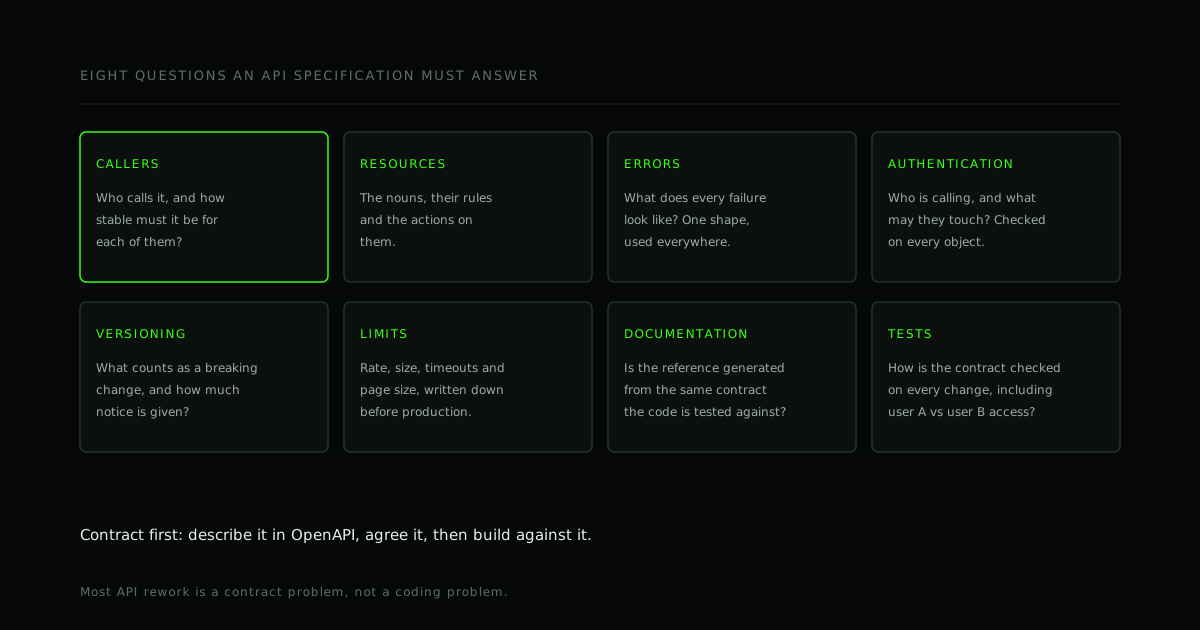
A short spec that prevents most API rework: who calls it, the resources and errors, authentication, versioning, limits, documentation and tests. With an OpenAPI example and a checklist for briefing a vendor.
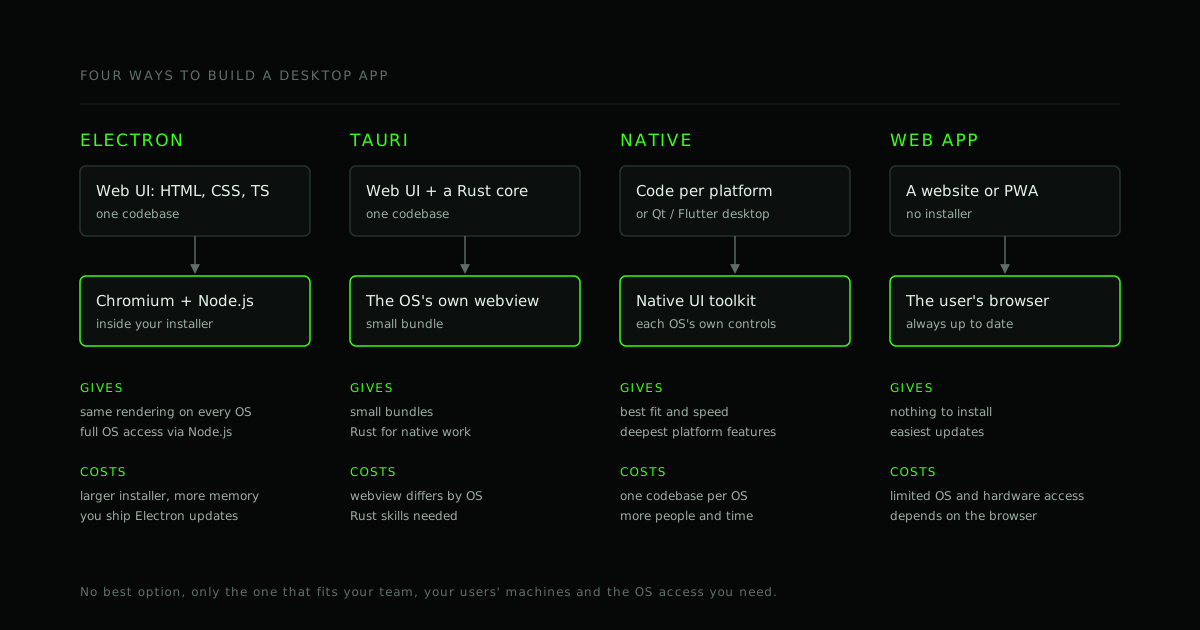
How to choose a stack for a desktop app: what Electron, Tauri, native toolkits and a plain web app each cost you, the security and packaging work every option needs, and the questions that decide it.
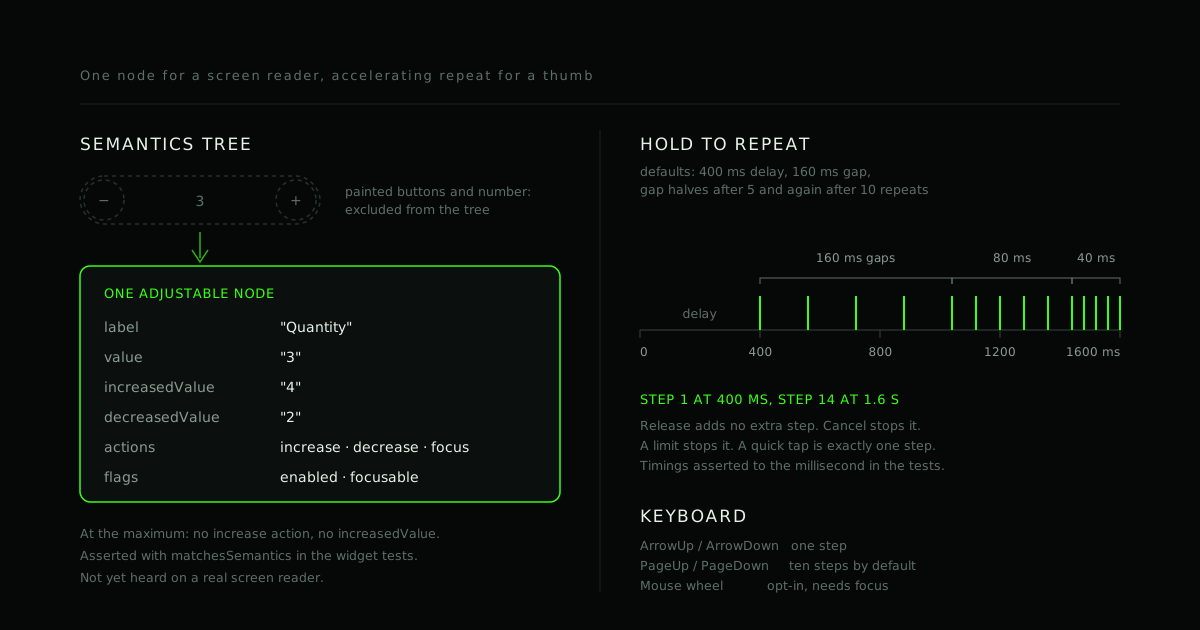
A Flutter quantity stepper that shows screen readers one adjustable node, repeats on long-press with acceleration, takes keyboard and typed input, and works as a real FormField. Source, tests and an honest comparison.
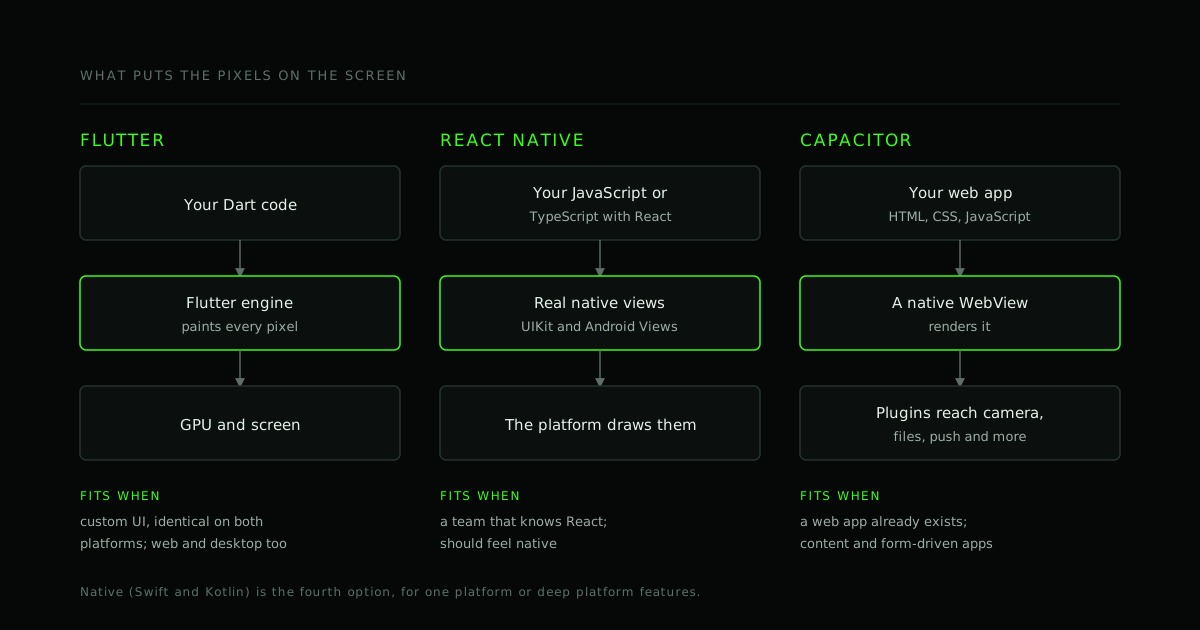
A decision guide, not a benchmark: what each framework actually is, the six questions that change the answer, when native or a PWA is the better call, and why a one-week spike beats any comparison table.
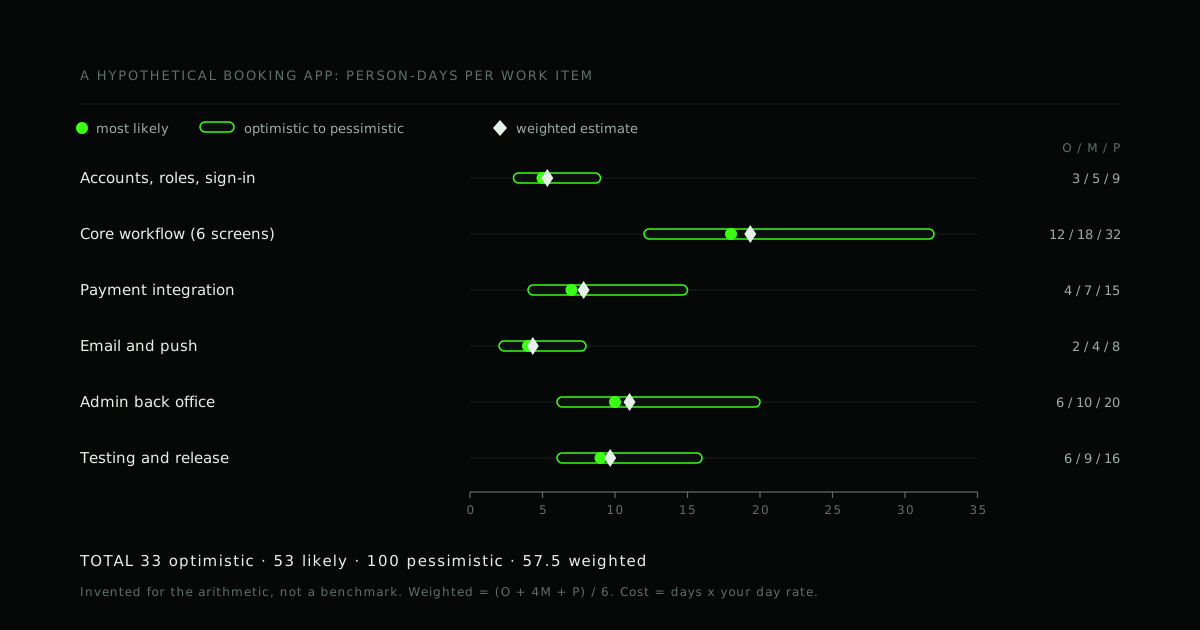
Why quotes for the same app differ so much, the factors that actually move the price, a worked three-point estimate you can copy, and the running costs most budgets forget.
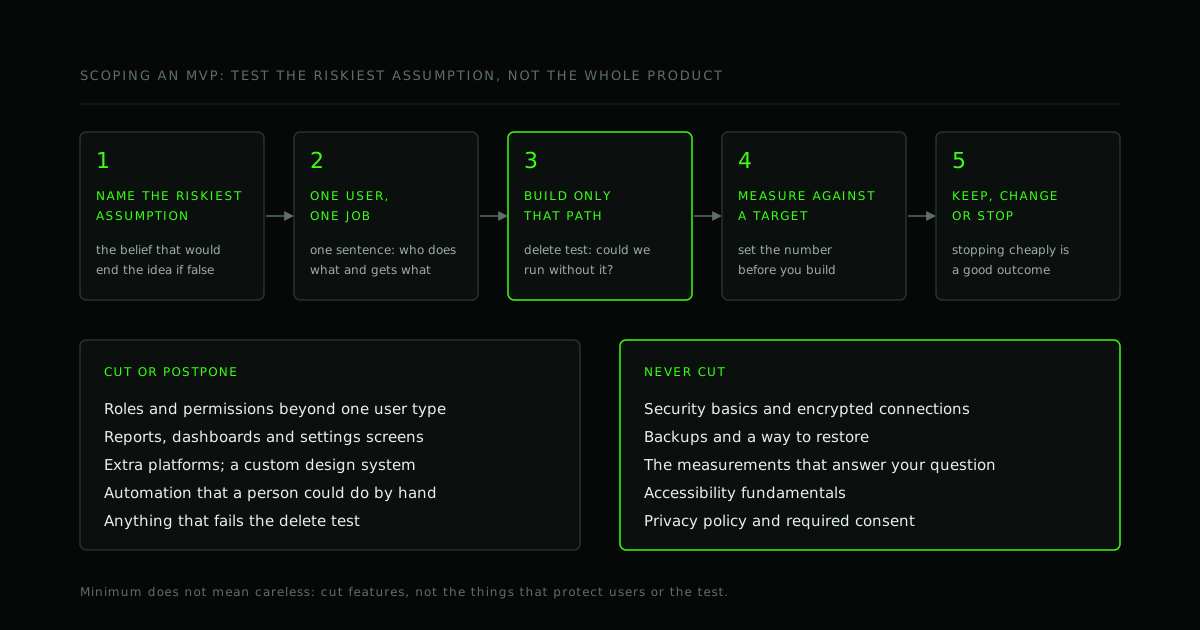
An MVP is the smallest release that can test your riskiest assumption with real users. A one-page scoping method: one user, one job, a delete test, what to buy instead of build, and what never to cut.
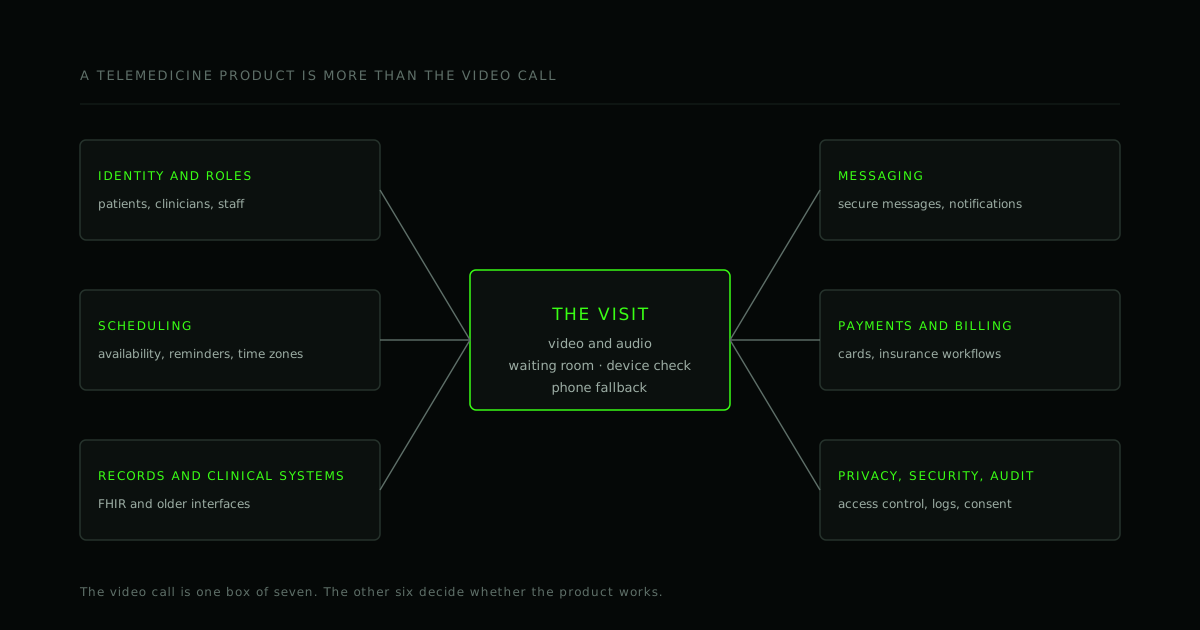
A telemedicine product is more than a video window. The building blocks, the reliability and privacy work, integration with clinical systems, build-versus-buy for the video layer, and the questions to ask a development partner.
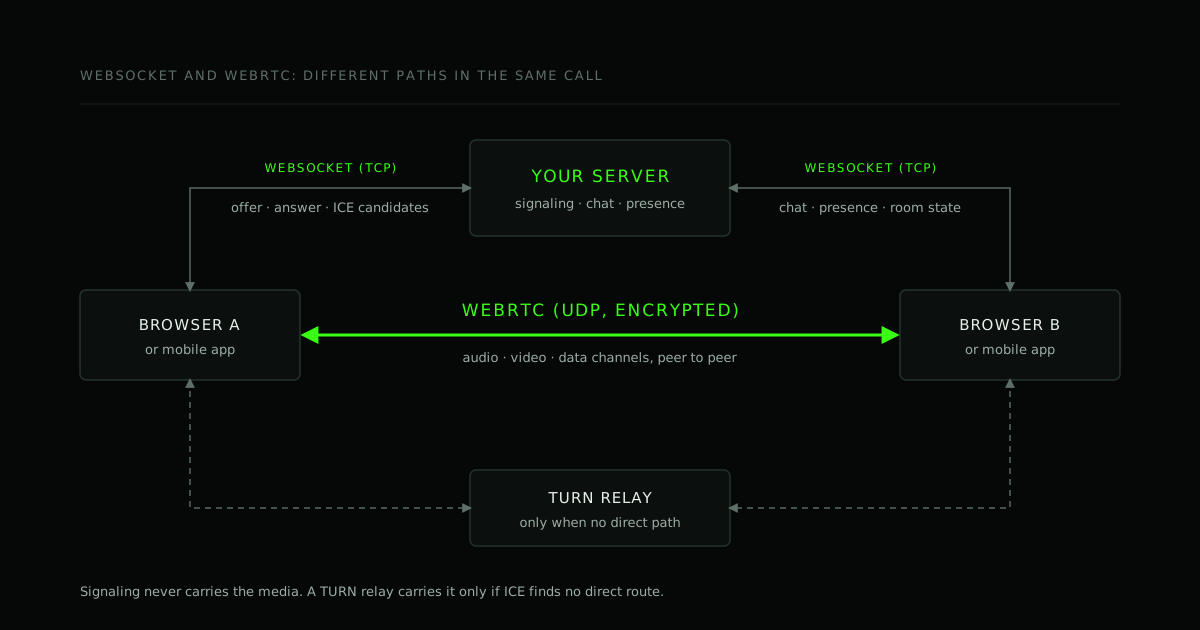
WebSocket carries messages between a client and your server; WebRTC carries live audio, video and data between peers. What each is for, where each breaks in production, and how they fit together in one call.
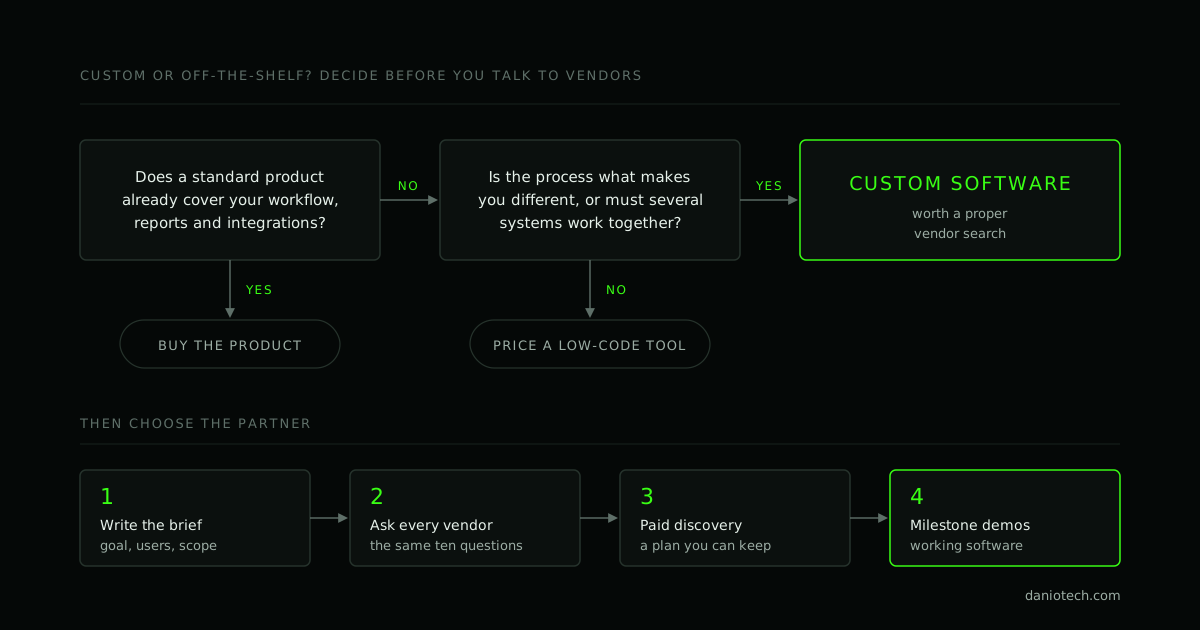
Custom or off-the-shelf? What to write down before you talk to vendors, ten questions to ask each one, how to compare proposals fairly, the contract terms that matter, and the red flags.
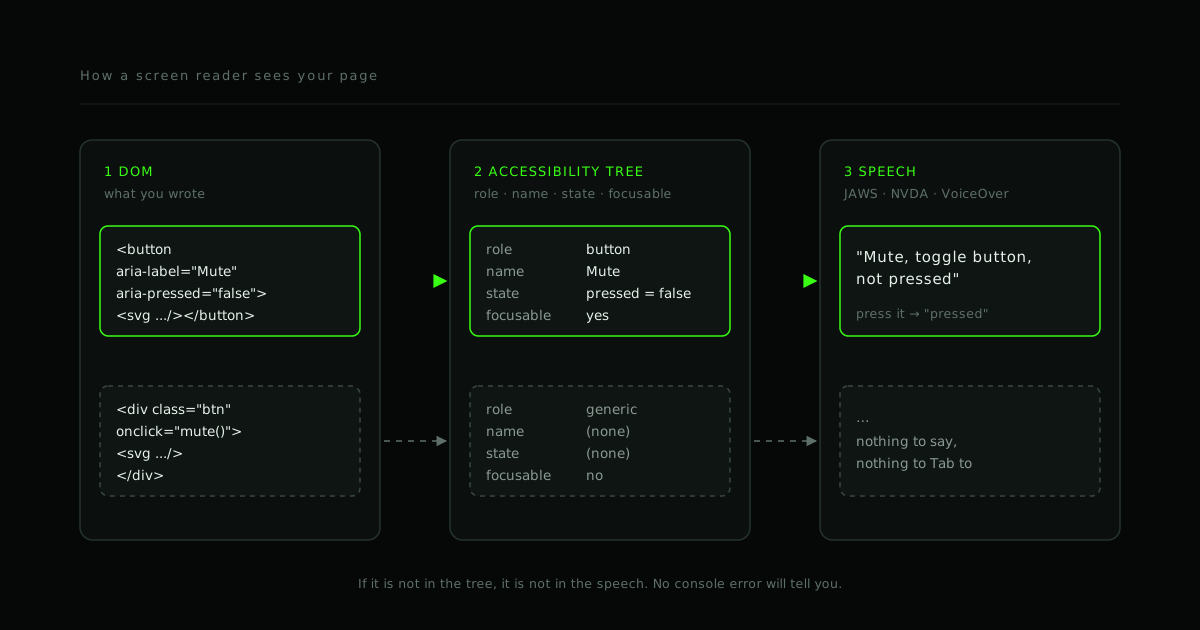
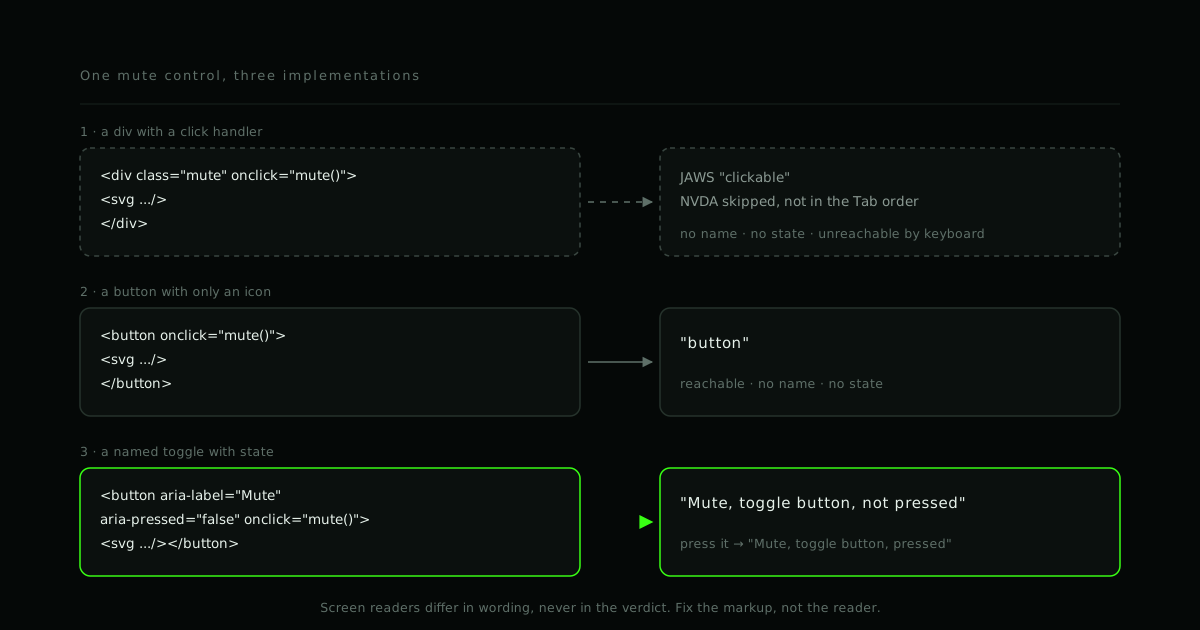
Not a checklist run before launch. Semantics first, keyboard before mouse, state announced when it changes, and testing with the screen readers people actually use — JAWS, NVDA and VoiceOver — including inside a live video call.
JAWS is commercial, Windows-only, and still the screen reader most people name as their primary one. Where it differs from NVDA — automatic Forms Mode, more repair, different quick keys — why the 40-minute demo is not a testing licence, and how to run a JAWS pass that catches what NVDA let through.
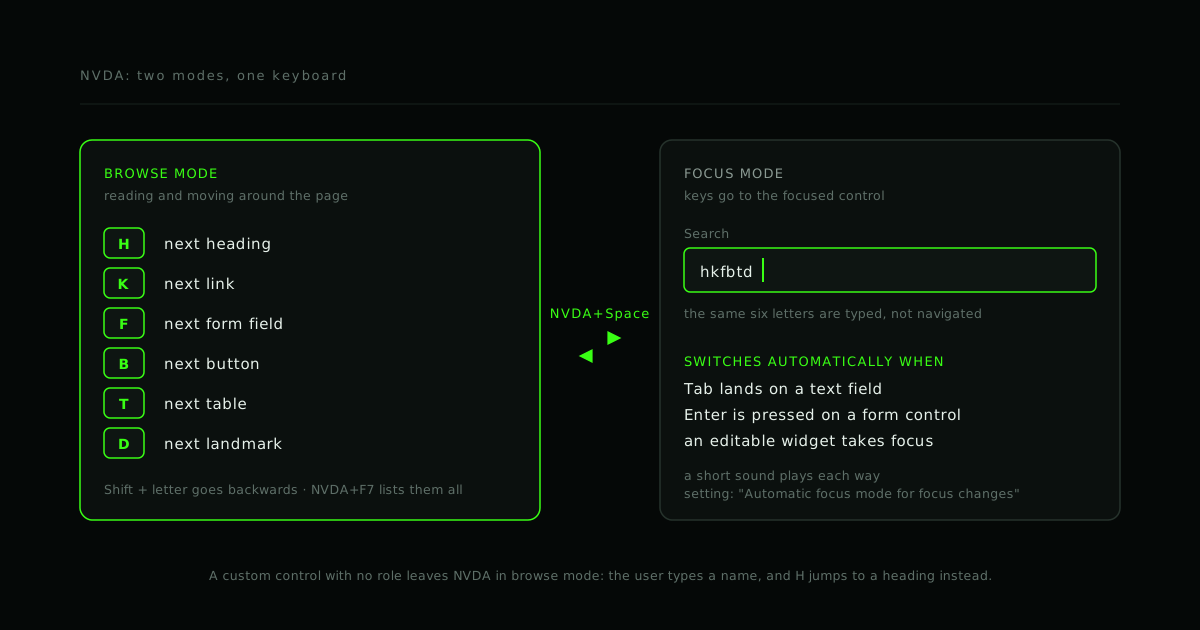
NVDA is free, open source, and the screen reader most people say they use. How to set it up for testing, the keys that cover most of the job, browse mode versus focus mode, and how to read what it says instead of trying to listen.
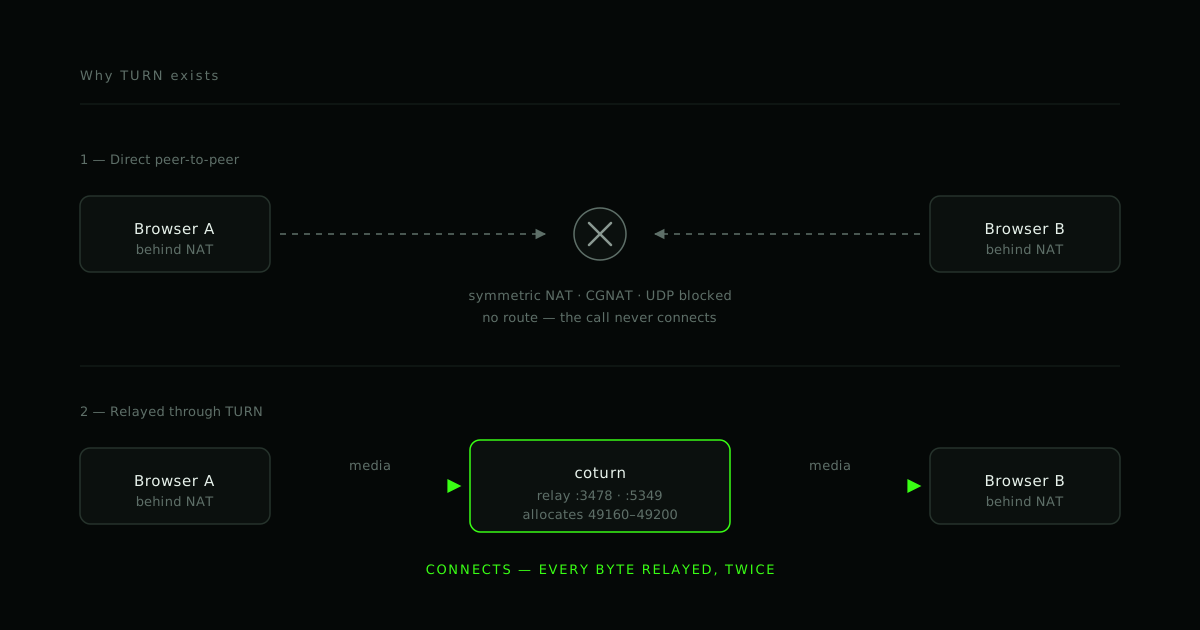
A complete, working coturn configuration for WebRTC — relay port ranges, time-limited credentials, TLS on 5349, the external-ip trap on cloud VMs, and the SSRF hardening almost every guide leaves out.
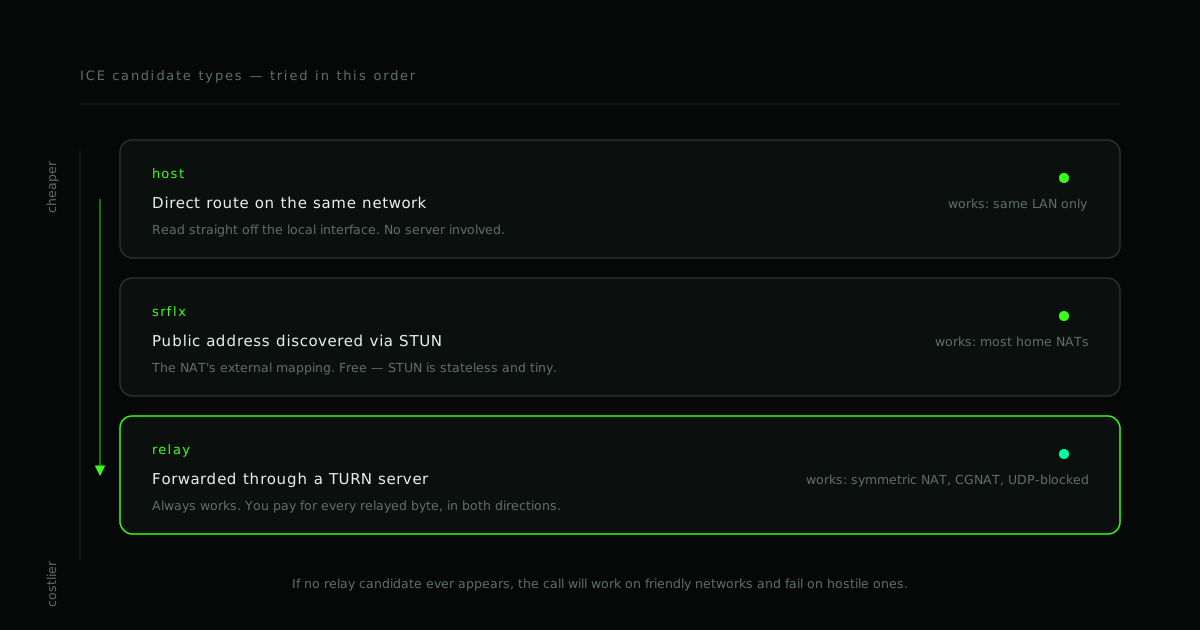
A diagnostic walk through ICE: what host, srflx and relay candidates mean, why symmetric NAT and CGNAT break direct connections, and how to read candidate pairs to find the actual failure.
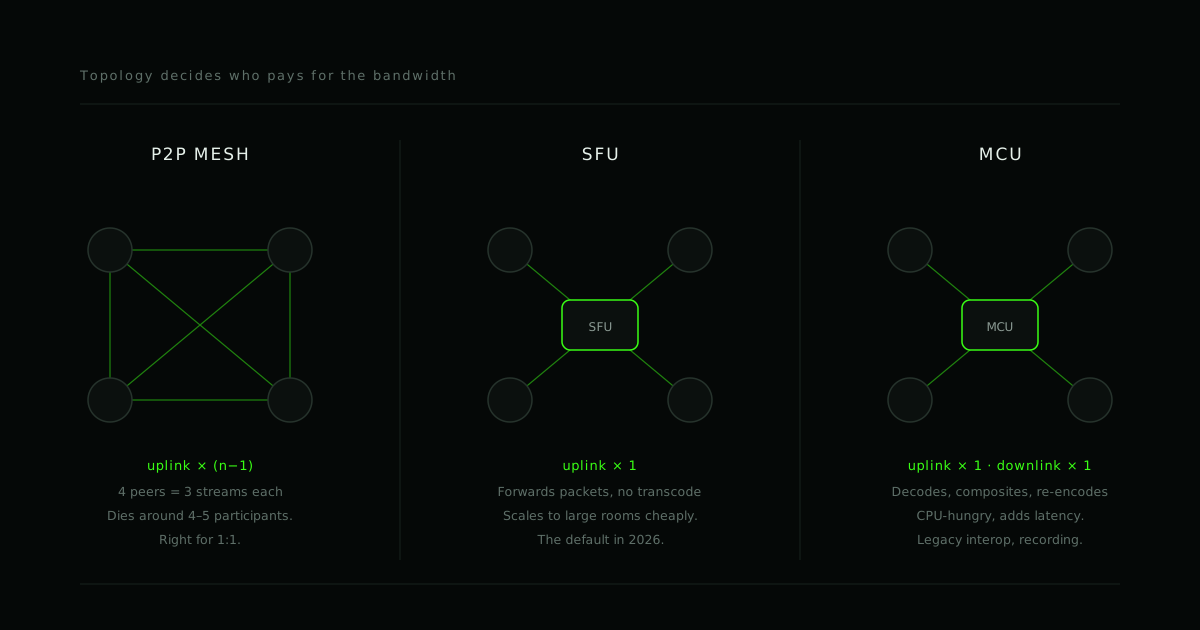
Why peer-to-peer stops working at four participants, what an SFU actually does, when an MCU is still the right answer, and how the choice drives your bandwidth and CPU bill.
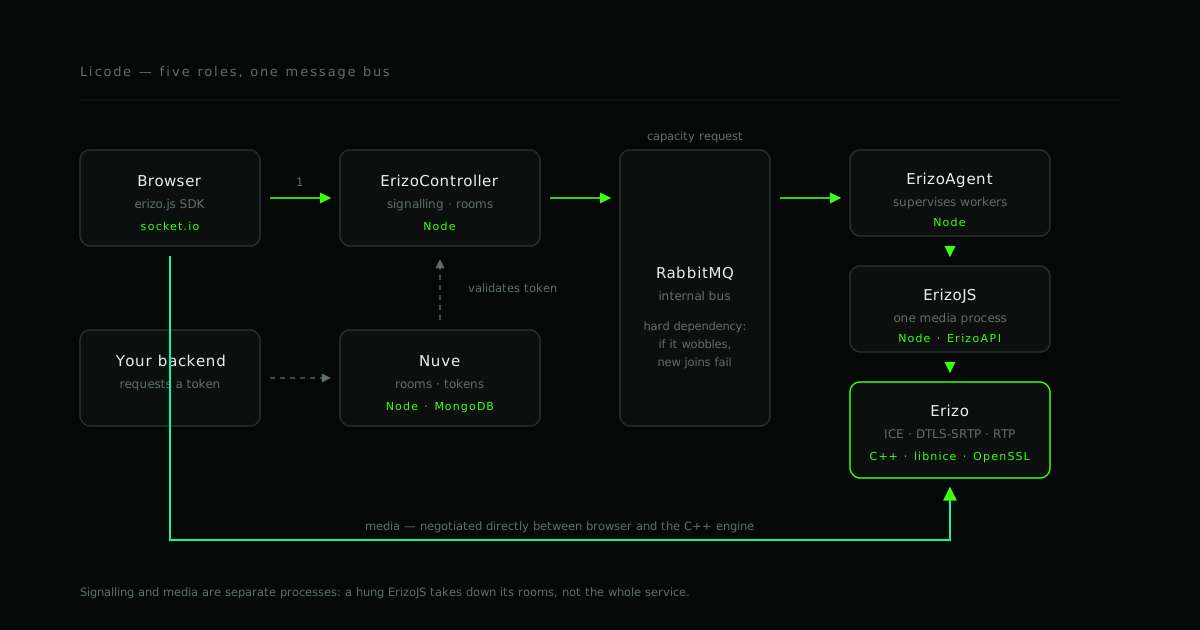
What Nuve, ErizoController, ErizoAgent and ErizoJS each actually do, why Licode deployments become hard to build years later, and how its concepts map onto mediasoup and LiveKit if you decide to migrate.